
Plant City Past-Resident Sources
A backward search begins with today's parcel and moves across several record eras. The Hillsborough County Property Appraiser identifies the current owner, folio, situs, legal description, and recent sales. The Clerk's online index carries modern deeds. Archived index books and staff-assisted records take the ownership chain earlier. Occupancy evidence comes from Plant City directories and the public federal census, while maps help resolve old buildings and numbers.
| Source | Years It Covers | Where Held | What It Shows |
|---|---|---|---|
| HCPA parcel record | Current assessment and sales context | HCPA web, phone, office | Owner, folio, situs, legal, sales |
| Official Records Index | 1965-present | Clerk online | Grantor, grantee, instrument, image |
| Archived OR indexes | 1958-1966 | Clerk archive | Book and page bridge |
| Archived deed indexes | 1948-1957 | Clerk archive | Grantor/grantee bridge |
| Records Library | Material from 1836 | Staff, workstation, microfilm | Older land books and indexes |
| Plant City directories | 1937-1938; various 1955-2000 | State Library and History Center | Listed adults and addresses |
| Federal census | Through 1950 public | NARA and libraries | Household at enumeration date |
A deed or tax roll supports ownership. A directory or census supports occupancy. Homestead supports a principal-residence inference for an assessment year, not every household member. A permit identifies dated work and an applicant. Mark each year with its evidence type and confidence.
Chain Plant City Deeds Backward
Open the current parcel in the HCPA property and GIS search. Preserve its folio and exact legal description, then note the newest sale instrument. Retrieve that deed in the Official Records Index. The seller is the grantor. Search that person as an earlier grantee, then confirm the same lot, block, subdivision, or metes-and-bounds description.
Repeat one transfer at a time. Mortgages, satisfactions, probate judgments, corrective deeds, and quitclaim deeds can explain a chain but are not automatically market sales. Preserve instrument number, recording date, party role, and legal description. A same-name hit elsewhere in Hillsborough County is not Plant City evidence until the parcel or land description connects it.
- Grantor
- The party transferring a recorded interest.
- Grantee
- The party receiving it.
- Chain of title
- The linked sequence of recorded interests in one parcel.
- Legal description
- The land identity in a deed, often lot and block or metes and bounds.
Cross Plant City's 1965 Cutoff
The web cutoff is not a loss date. At 1965, change access channels. Use archived Official Records indexes for 1958 through 1966, deed indexes for 1948 through 1957, then ask the Hillsborough Clerk Records Library to follow older volumes. Its material reaches 1836. Tax rolls from 1883 can test ownership between deeds.
- Prepare names, dates, and any book, page, or instrument numbers before asking staff.
- Search the 1958-1966 OR archive, then the 1948-1957 deed index.
- Use Records Library books, microfilm, or images for earlier transfers.
- Compare tax, marriage, probate, and obituary evidence when heirs or name changes break the line.
Channels include anonymous web search, archived digital indexes, public workstations, phone or email help, and written requests. The Clerk accepts requests through its portal, publicrecords@hillsclerk.com, (813) 284-2131, or mail to 601 E. Kennedy Boulevard, 13th Floor, Tampa. Published fees are $2 per staff-searched year, $1 per page, and $2 for certification.
The captured Hillsborough Clerk page appears below.
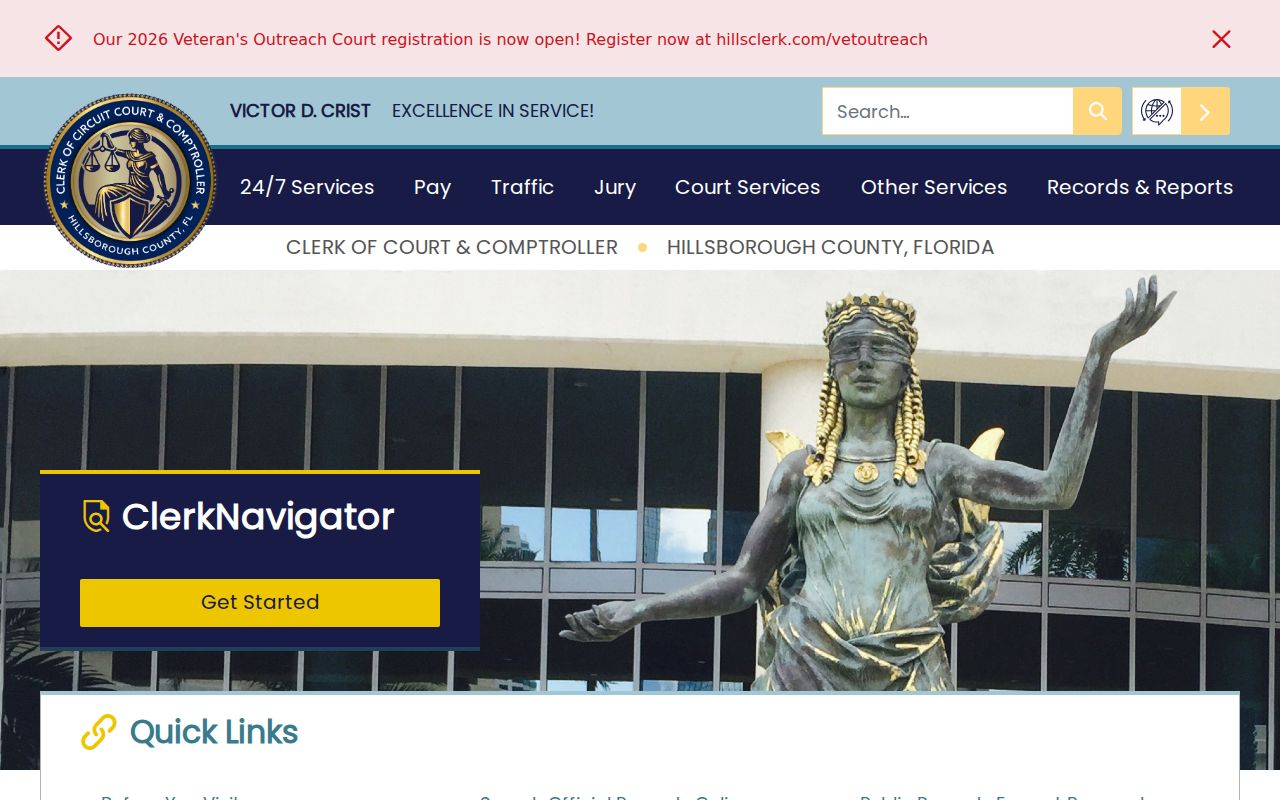
It routes users to Clerk services, while the deed index and archive links answer different time periods.
Plant City Directories Meet Maps
A Miller directory is verified for 1937-1938, and the Plant City Photo Archives History Center reports Polk directories from various years between 1955 and 2000. That does not promise an annual run. Confirm the title, year, coverage statement, and key. Alphabetical pages start with a name. A reverse section, when present, starts with a street number.
Sanborn sheets are verified for 1909, 1914, 1919, and 1925. They show footprint, use, material, and old numbering, but not occupants. Pair a sheet with a directory and deed legal description. No complete Plant City renumbering chronology was found. The History Center takes appointments at 813-754-1578 and states about one to two weeks for remote research.
The directory collections are covered in depth on the Plant City directory book page.
Plant City Past Household Evidence
Build an occupant line apart from ownership. Search a directory by owner and spouse, then inspect the street section if it exists. Move one edition earlier and later. Note initials, widow marks, occupations, rural routes, and changed numbers. Pair directory evidence near 1940 or 1950 with the corresponding census. The 1950 schedule is the newest public federal population census under the 72-year rule.
- Record the directory entry exactly, including year and page.
- Check the census household at its enumeration date.
- Use an obituary or probate case to test death, spouse, or heir links.
- Find the first changed directory entry to narrow a transition.
A missing entry may mean an unlisted phone, rural delivery, initials, a gap, or a recent move. It does not prove absence. Cemetery directories, newspapers, death records, and probate can connect a deceased prior owner to heirs, but each claim needs corroboration.
Lawful use. House and family history are proper uses. Do not use previous-resident records to track, harass, expose, or harm anyone.
Verify Plant City Name Changes
Probate, marriage, and obituary sources may explain why a surname vanishes. HOVER can locate a probate case, but an index does not ensure that every image is remotely visible. The HOVER case summary captured below illustrates the case route.
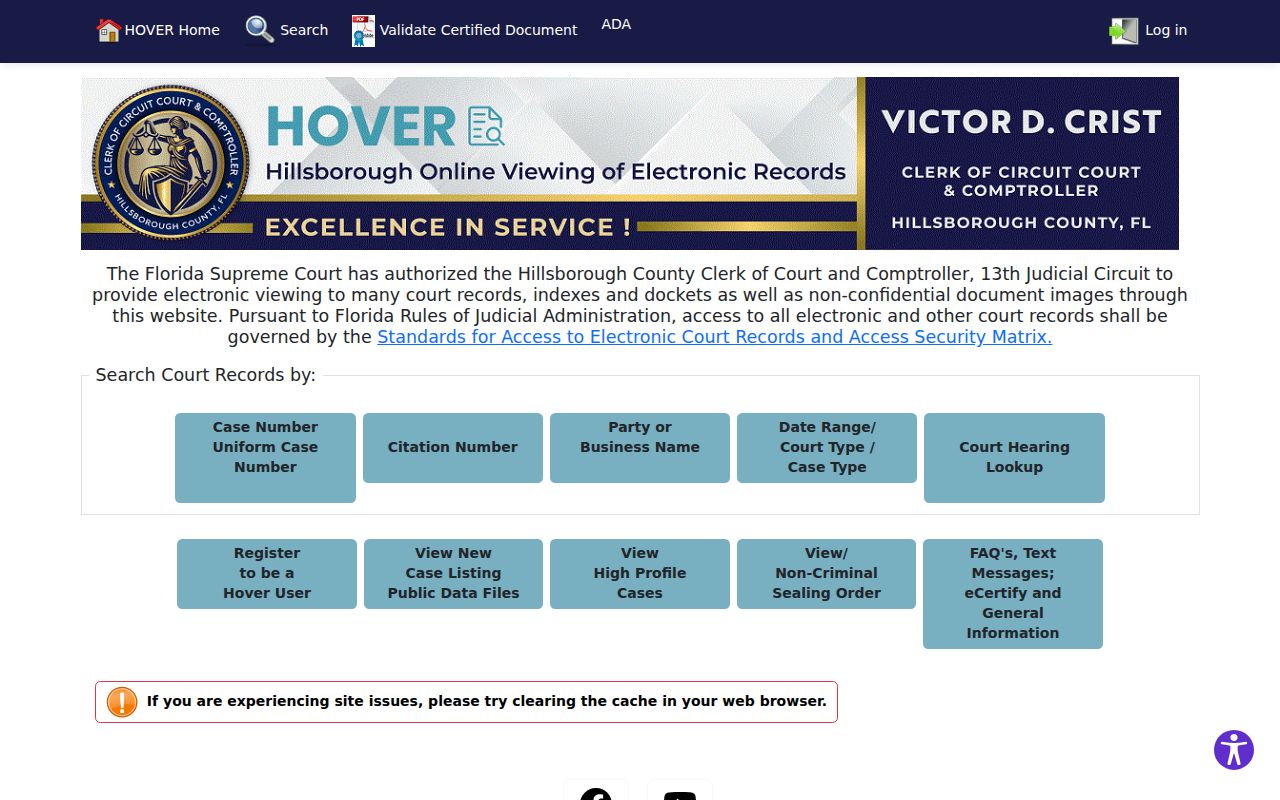
Read roles, filed dates, events, and disposition, then request a defined paper file or redacted image if needed.
Sunbiz can identify a company or association in an owner line. The Sunbiz name search appears below.
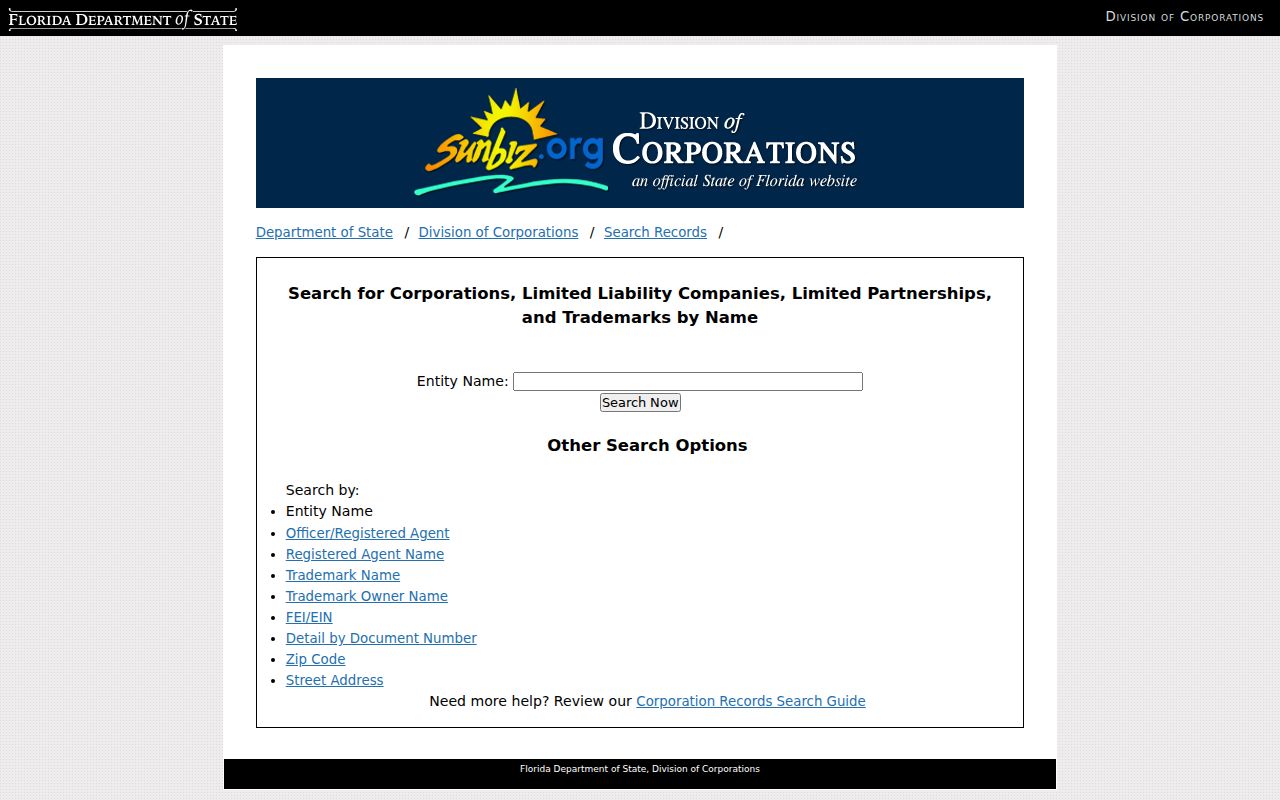
An officer or agent address proves a filed business contact, not residence at the parcel.
Request Plant City History Records
Florida permits any person to request public records without generally stating a reason, and requests need not be written. A useful request names the custodian, address or folio, series, date span, and format. Ask for an estimate before extensive labor. The official Florida chapter 119 text is captured below.
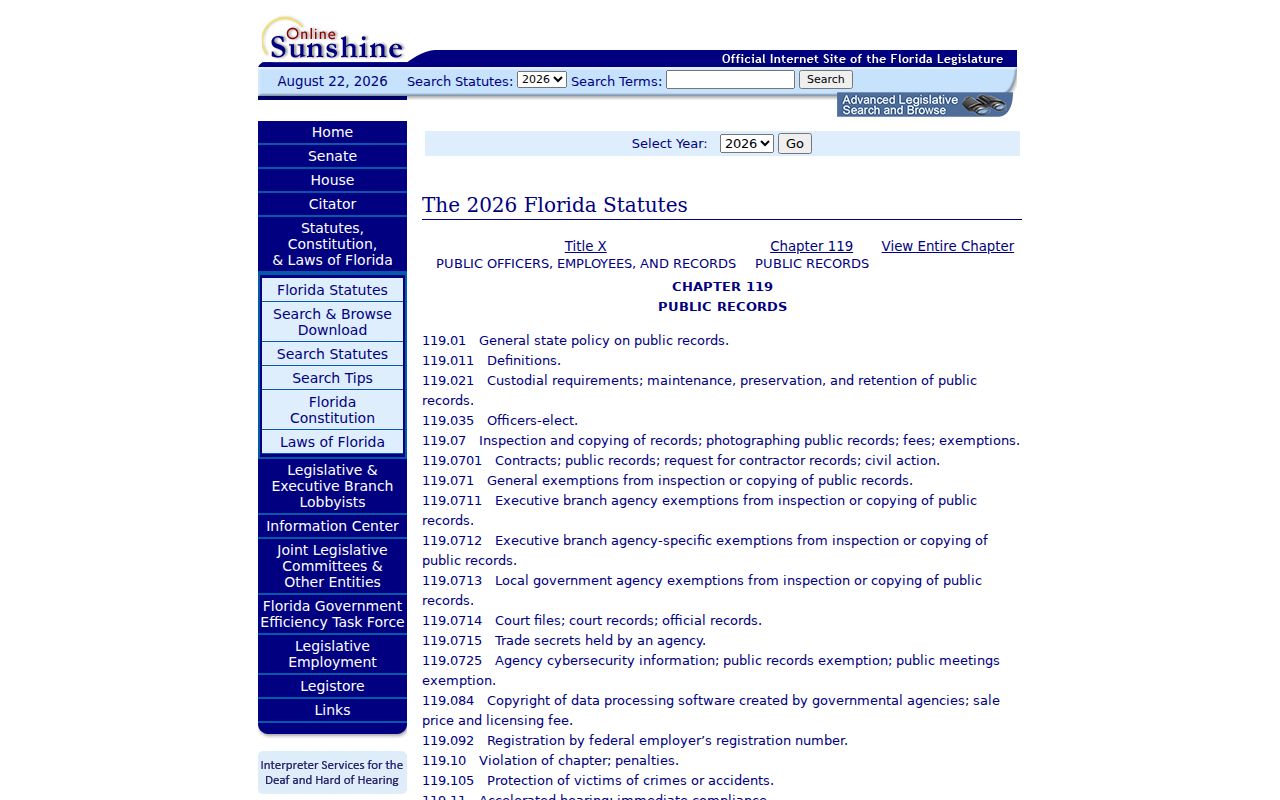
Public access does not override sealed files, protected addresses, restricted images, or vital-record eligibility. Email to an agency may itself become public, so phone or mail is an alternative.
Prepare the request from the evidence already collected. For a 1950s transfer, give Records Library staff the grantor and grantee spellings, the narrow year span, and the subdivision, lot, and block from the newer deed. Ask first for the index entry and its book-and-page citation. That focused approach avoids paying staff to repeat a broad surname search. It also makes the response easier to compare with tax rolls, which Hillsborough County reports from 1883 forward. If the answer identifies only a mortgage, satisfaction, probate judgment, or corrective instrument, keep searching for the conveyance that actually moved an ownership interest.
Track occupancy in a separate column. A deed or tax roll supports ownership, while a dated city directory or public census supports a listed occupant or household. Homestead status is useful owner-occupancy evidence but does not identify every resident. A permit names the applicant or contractor for specific work, not the household. An obituary can supply family and address clues, yet probate and recorded instruments should confirm an heir or transfer. Recording the source type, event date, role, address type, and retrieval date prevents a mailing address, business contact, or old directory entry from being presented as a present Plant City residence.
Dates also need precise labels. A deed may have separate execution and recording dates. A parcel card has an assessment or update year, while its sale history may point to an older instrument. A directory is a snapshot for its stated edition, and the federal census records one enumeration date. Keep all of those dates intact. If HCPA has not yet reflected a new recorded transfer, compare the latest deed and ask the property appraiser about its update cycle instead of deciding that one source is wrong.
Plant City's postal history can affect an address trail. USPS shifted thousands of deliveries and post-office boxes among the 33563 through 33567 cluster in July 2002. When a pre-2002 directory, court filing, or deed-related address does not match the modern ZIP, search both the old and current code while holding the street and house number constant. The postal change did not by itself change ownership or city jurisdiction. Confirm the parcel's municipality and legal description through HCPA, especially in rural territory where a Plant City mailing name can refer to unincorporated Hillsborough County.